January 28, 2026 |
Where fire, freshness, and balance meet the table
In Tunisia, salads are never an afterthought. They are not decorative pauses between dishes, nor are they meant to be light distractions. They are anchors. They prepare the palate, calm heat, introduce freshness, and quietly define the meal. Before couscous arrives, before grilled fish is set down, before bread is torn, salads are already present. Waiting. Complete.
Tunisian salads speak softly, but they speak clearly. They carry smoke, acidity, olive oil, and patience. They are made to be shared, spooned from the same plate, passed gently from hand to hand. They belong to the center of the table.
No salad represents Tunisia more fully than slata mechouia. Its foundation is fire. Peppers and tomatoes are grilled directly over flame until skins blacken and blister. The process is not rushed. Char matters. Smoke matters. Without it, the salad loses its soul.
Once cooled, the vegetables are peeled by hand. Seeds are removed carefully. Everything is chopped slowly, not crushed, preserving texture while allowing flavors to merge. Garlic enters sparingly. Olive oil binds. Salt steadies. Harissa appears as a suggestion rather than a demand.
The salad rests. That pause is essential. Slata mechouia improves as it sits, smoke softening into sweetness, heat settling into warmth.
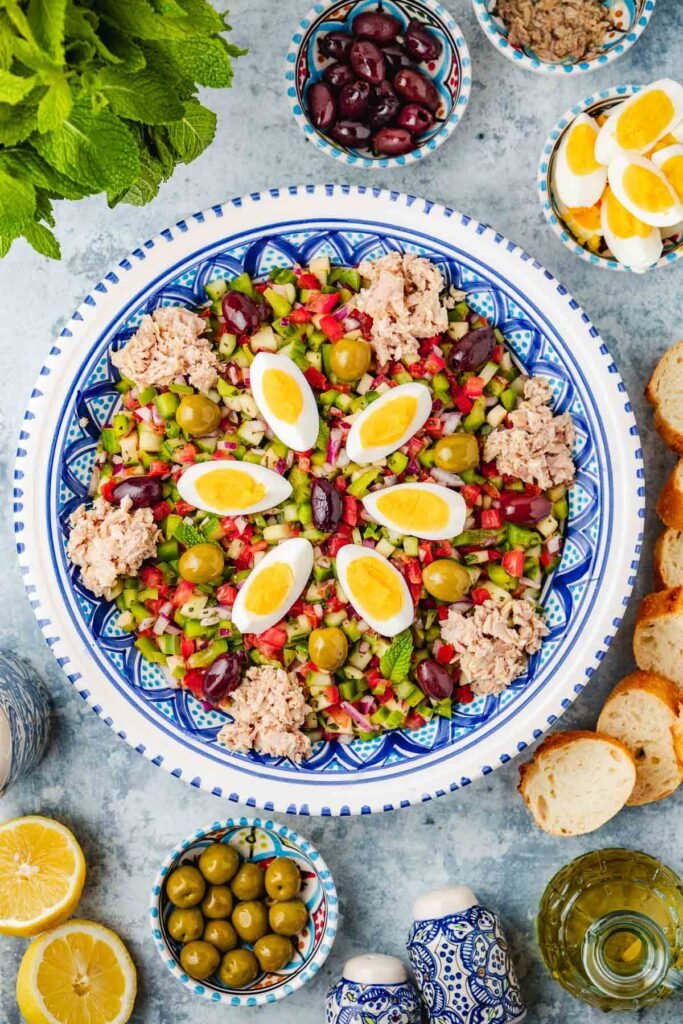
When served, it is often crowned with tuna, sliced eggs, olives, sometimes capers. Bread follows instinctively. This is not garnish. It is nourishment shaped by restraint.
Slata mechouia tastes like summer afternoons, like rooftops and courtyards, like hands peeling peppers while conversations drift nearby. It is Tunisian fire, made kind.
Where mechouia is smoky and deep, slata tounsia is bright and immediate. Tomatoes, cucumbers, onions, sometimes peppers are cut cleanly and dressed simply with olive oil, salt, and lemon. There is no excess. No hidden spice. The vegetables are expected to speak for themselves.
What elevates this salad is quality. Tomatoes must be ripe. Cucumbers crisp. Olive oil generous. Served alongside grilled meats or fish, slata tounsia refreshes without interrupting. It resets the palate and invites the next bite.
It is the salad of everyday lunches, of family meals eaten without ceremony, of balance achieved through simplicity.
Slata ommek houria tells a different story. Carrots are boiled until tender, then crushed gently, not puréed. Garlic is added carefully. Harissa warms rather than overwhelms. Olive oil rounds everything out.
The texture is soft, comforting. The color deep orange. Often topped with tuna or eggs, it feels both humble and deliberate. This salad appears often in winter, when warmth matters, when softness is welcome.
Its name evokes maternal care, and the association is accurate. It is a salad that nourishes quietly, without edge.
Less known outside homes, slata felfel focuses on peppers without heavy charring. Green peppers are lightly fried or sautéed, then chopped and dressed with garlic, olive oil, and sometimes vinegar. The flavor is mellow, slightly sweet, grounded.
It often accompanies fish or appears as part of a larger spread. It does not demand attention, but it completes the table.
Some Tunisian salads lean toward stews, blurring lines intentionally. Hraimia, made with tomatoes, garlic, chili, and olive oil, often enriched with eggs or fish, sits somewhere between salad and sauce. Served warm or room temperature, it invites bread and patience.
These salads remind us that Tunisian cuisine does not rigidly separate categories. What matters is harmony, not classification.
Across all Tunisian salads, olive oil is not seasoning. It is structure. It carries flavor, softens edges, connects ingredients. Lemon brightens. Harissa defines. Salt anchors. Nothing is accidental.
Salads are adjusted by instinct. A little more oil. A pause before serving. A final stir just before the plate reaches the table. These gestures are learned, not written.
Tunisian salads are deeply social. They are placed at the center, not portioned individually. Everyone serves themselves. Everyone tastes the same balance. There is no hierarchy on the plate.
They welcome guests before words do. They sit beside bread as invitation. They allow meals to unfold slowly.
In homes, salads often appear first and linger longest. They absorb conversation. They change temperature. They deepen.
Tunisian salads teach an essential truth about the cuisine. Intensity does not require excess. Flavor does not require complication. Fire can be gentle. Freshness can be grounding.
To eat slata mechouia or any of its companions is to understand Tunisia’s relationship with food. Respect for ingredients. Trust in time. Confidence without noise.
These salads are not sides. They are statements.
They say that balance is learned, that sharing is essential, and that the most memorable flavors are often the quietest ones.
And when the meal ends, long after the main dish is finished, it is often the salad plate that remains half full on the table. Waiting. Still relevant. Still complete.