January 28, 2026 |
Where sun, water, and patience become sweetness
In the oases of southern Tunisia, time moves differently. Palm fronds whisper overhead, irrigation channels murmur softly, and light filters through layers of green before touching the ground. Here, sweetness is not rushed. It is grown slowly, measured by seasons rather than schedules. Dates are not simply fruit in Tunisia. They are sustenance, ceremony, and continuity.
For centuries, date palms have anchored life at the edge of the Sahara. They made settlement possible where little else could survive. Their shade protects gardens below. Their roots hold water. Their fruit carries energy dense enough to sustain long journeys and long days. In Tunisia, dates are not an accessory to the table. They are foundational.
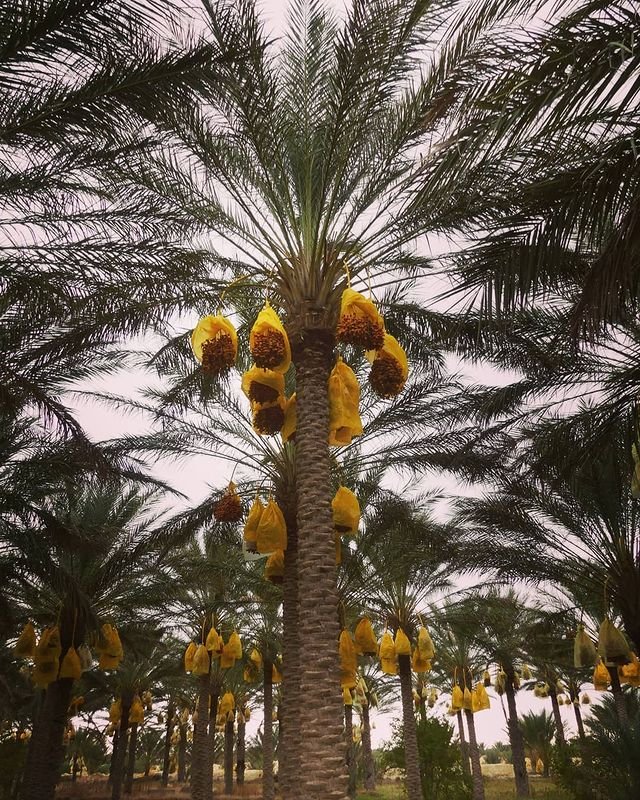
The great oases of Tozeur and Kebili form the heart of Tunisian date culture. Thousands of palms rise in ordered rows, their trunks tall and disciplined, their crowns spreading like quiet umbrellas against the desert sky. Beneath them, life layers itself carefully. Vegetables grow. Water flows. Shade protects everything below.
This layered ecosystem is ancient. It is not accidental agriculture, but learned balance. The palm stands above, filtering sun and wind. Beneath it, crops survive heat that would otherwise burn them away. Dates are the visible reward of a system that understands restraint.
Among Tunisia’s many date varieties, Deglet Nour holds a special place. Often called the queen of dates, its name means date of light. When held up to the sun, the fruit glows softly, amber flesh revealing its translucence. This clarity is not cosmetic. It signals balance. Sweetness without heaviness. Texture without resistance.
Deglet Nour grows best where days are intensely bright and nights cool, conditions Tunisia offers naturally. The result is a date that is tender, honeyed, and clean on the palate. It does not overwhelm. It lingers.
While Deglet Nour leads Tunisia’s reputation abroad, local life also embraces other varieties, each with its own purpose. Some are softer and darker, reserved for paste and pastries. Others are firmer, eaten fresh during harvest. Diversity here is practical, not ornamental.
The date harvest begins in early autumn, when palms are heavy with fruit and air carries a deeper warmth. Harvesting is delicate work. Men climb the palms using rope harnesses and practiced movement. Each cluster is handled carefully. Bruising changes flavor. Rough handling shortens life.
Dates are cut, lowered gently, and sorted immediately. Quality is judged by color, firmness, and scent. Nothing is random. Experienced hands know which fruit is ready and which must wait. In the oasis, waiting is skill.
Harvest days are communal. Families gather. Children learn by watching. Elders guide with quiet authority. These moments are not recorded, but remembered.
After harvest, dates are cleaned, aired, and sometimes gently cured. The goal is preservation without loss. Sun, air, and time do most of the work. Modern facilities now assist with sorting and packaging, but the philosophy remains unchanged. Dates should remain what they are.
Fresh Deglet Nour is often eaten as it is, paired with nuts, bread, or simply enjoyed alone. Other varieties are transformed. Dates are pitted and ground into paste for pastries. They are stuffed with almonds. They appear in couscous, sauces, and celebratory dishes. During Ramadan, dates open the fast, restoring energy with quiet efficiency.
In Tunisian homes, dates are always present. Not as dessert, but as reassurance. A bowl on the table. A small offering for guests. A reminder that sweetness can be simple.
Dates carry meaning beyond nutrition. They mark religious moments. They accompany birth celebrations. They are offered at funerals. They travel in pockets and bags, ready to answer hunger without ceremony.
In the south, dates are eaten fresh from the palm. In the north, they arrive carefully packed, carried across the country like a message from the desert. Every Tunisian knows the difference between industrial sweetness and date sweetness. One fills quickly. The other sustains.
Date cultivation supports entire regions. Farmers, climbers, sorters, packers, and exporters depend on the palm. Like olive oil, dates are part of Tunisia’s agricultural backbone. And like olive oil, much of the finest quality has long traveled anonymously. That, too, is changing.
Today, more producers export under Tunisian identity, highlighting origin and method. Sustainability matters. Date palms require careful water management, not excess. Oases survive through balance, not extraction.
Choosing authentic Tunisian dates supports ecosystems that have resisted collapse for centuries. It supports knowledge passed through practice rather than instruction.
There is a moment when a date is split open and offered. The skin parts easily. The flesh shines. The pit is removed. That moment is quiet, generous, and ancient.
Tunisian dates are not luxury fruit. They are trust. They are the result of heat endured, water protected, and time respected. They carry the desert’s discipline and the oasis’s generosity in equal measure.
To taste them is to understand a different relationship with sweetness. One that does not rush, does not exaggerate, and does not fade quickly.
Like the palms themselves, Tunisian dates stand tall, patient, and enduring. Rooted in sand, lifted by light, offering sweetness not as indulgence, but as continuity.