January 28, 2026 |
Where bread holds memory, emotion, and time
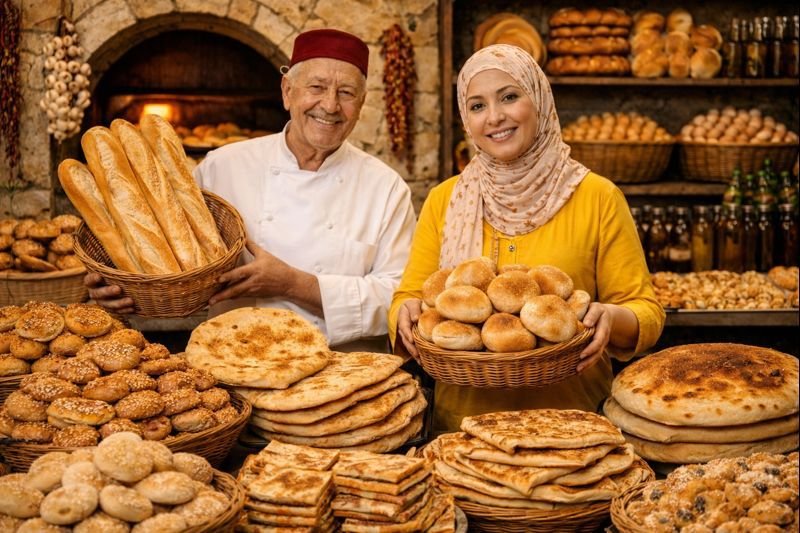
Stepping into a Tunisian bakery at dawn feels less like entering a shop and more like entering a shared moment of comfort. Warm air greets you immediately, carrying the scent of grain, soft dough, and heat captured inside bread. The sounds are gentle and familiar: paper bags unfolding, trays sliding, a quiet rhythm that begins long before the city fully wakes. Bakers start their work while the streets are still cool, shaping dough in silence so that warmth is already waiting for everyone else.
People arrive half awake, sometimes in slippers, sometimes in work jackets, keys still warm in their hands. Few words are exchanged. None are needed. The bakery offers reassurance before the day even begins.
The heart of Tunisian bakeries is not pastry. It is bread shaped by centuries of daily life. Tabouna is one of the oldest expressions of this tradition. When you hold it, the heat passes instantly into your palms, as if the bread remembers the fire that formed it. Its surface is lightly blistered, its inside pale and airy, its scent touched by smoke and clay. Tearing it open releases steam and stretches the dough, filling the space with warmth.
Kesra tells a different story. Firmer and more grounded, it tastes of land and labor. Made with semolina, it once sustained workers through long days. Dipped in olive oil, it grows richer. Paired with a bowl of chorba, it softens into comfort. Families often stack it under cloth, knowing it keeps warmth longer than expected.
Mtabga is denser still, created to travel. Folded into cloth, packed into lunch boxes, carried into fields, it was bread made for endurance. Today it appears less often, but its aroma remains unchanged. Deep grain, faint salt, sun held inside flour. Eating it feels like touching lineage.
As the morning progresses, traditional breads give way to pastries behind glass. This is where French technique meets Tunisian rhythm. Croissants here are not overly light or fragile. They carry substance. The outer layers crackle gently while the inside stays soft and comforting. They are eaten not as a reference to Paris, but as part of a daily routine.
Pain au chocolat arrives warm, the chocolate inside just beginning to melt. Children hold them carefully, never quite sure where to start, always ending with traces of chocolate on their lips.
Millefeuille stands tall and precise, layers stacked like fine pages. Cream rests between them, topped with a glossy sugar surface that reflects the bakery lights. Cutting into it feels ceremonial, like opening something delicate.
French pastry in Tunisia has become familiar. It no longer feels imported. It belongs.
Tunisian pastries bring a quieter elegance. Kaak warka sits proudly in neat rows, white and delicate, filled with almond paste scented with rose water. It dissolves almost instantly on the tongue, leaving perfume rather than sweetness.
Samsa offers contrast. Crisp and triangular, it breaks audibly, honey clinging lightly, sesame scattered across the surface. Almond or hazelnut filling adds depth, demanding attention with every bite.
Makroudh feels anchored in home kitchens. Semolina dough folded around dates, fried until golden, then soaked in warm honey. Heavy, glossy, deeply fragrant. It tastes of holidays, of afternoons slowed by tea and conversation.
Tunisian bakeries also reflect their Mediterranean setting. Brioche appears golden and soft. Fougasse emerges dotted with olives, its aroma recalling open fields and coastal wind. Sometimes dough is brushed with olive oil, sometimes left plain to cool on marble counters. These breads are not imitations. They are Tunisian interpretations shaped by climate, habit, and generosity.
By midday, the atmosphere changes completely. School uniforms fill the doorway. Workers queue with coins already counted. Voices rise, laughter spills out, names are called. Displays now include stuffed baguettes glistening with tuna oil, pizza slices with stretching mozzarella, mlawi folded and ready to be filled.
Knives tap rhythmically as sandwiches are cut. Paper rustles. Someone recognizes a familiar face in line. People leave with arms full. Bread tucked under one arm, pastries boxed carefully, hands still warm from holding fresh dough.
For many, this moment defines childhood. Going to the bakery never meant choosing just one thing. Warmth made restraint impossible.
A Tunisian bakery is more than a place to buy food. It is emotional shelter. No matter the season or the state of the day, its rituals remain steady. Bread rises. Pastries shine. Someone greets you with familiarity, even without knowing your name.
Leaving the bakery means carrying warmth with you. The bag slowly absorbs heat. Steam gathers inside. The walk home feels lighter, quieter, improved in a way that is hard to explain.
That is why Tunisian bakeries stay in memory. They do more than feed. They remind you, gently and daily, that warmth is always close by, shaped into dough, waiting to be shared.