January 28, 2026 |
How a borrowed grain became deeply Tunisian
Rice is not native to Tunisia. It arrived through trade, maritime exchange, and cultural contact, finding its way gradually into local kitchens. Yet once it did, it was never treated as a foreign element. Tunisian cuisine absorbed rice fully, reshaping it through local ingredients, regional habits, and deeply rooted family rituals. Today, rice holds a unique place in Tunisian food culture, sometimes simple and everyday, sometimes festive, sometimes quietly ceremonial.
In Tunisia, rice is never neutral. It is not served plain or treated as a side dish without meaning. Each preparation reflects place, climate, and intention. Few dishes capture this better than rouz djerbi, a specialty that originated on the island of Djerba and later spread across the country. At first glance, it appears to be a simple steamed rice dish. In reality, it is a careful composition where rice becomes the center of flavor rather than its background.
Finely chopped herbs such as spinach, parsley, chard, and dill soften the grains and give them color. Chickpeas add substance, while spices bring warmth and balance. In many homes, the rice is not cooked in water, but slowly steamed above seasoned vegetables and broth. The grains absorb aroma and identity from within. What emerges is not rice with additions, but rice transformed by its surroundings.
Traditionally in Djerba, rouz djerbi was prepared in woven baskets placed above simmering pots, allowing steam to rise gently through layered ingredients. This method still survives today. When served at a family lunch, the dish feels patient and grounded, shaped by time rather than urgency, and closely tied to the island’s agricultural rhythm.
Further north, rice takes on a softer and more emotional role through chorba mfawra. Chorba is one of Tunisia’s most intimate dishes, closely associated with Ramadan evenings, winter nights, and long family gatherings. When made with rice, the soup thickens naturally as the grains release their softness into the broth. Tomato, garlic, coriander, and sometimes lamb come together to create a dish that nourishes far more than hunger. Chorba is comfort in its purest form. Families often keep a pot warm, knowing that a late arrival or tired guest will find relief in a simple bowl.
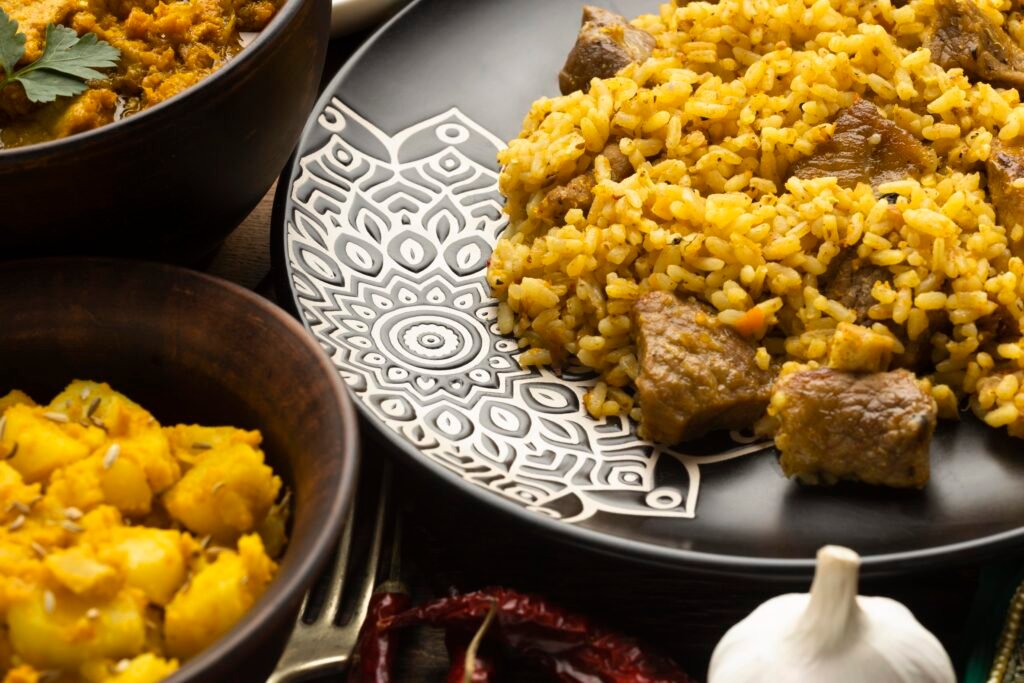
Rice also appears at moments of celebration through rouz aâzér, the golden rice prepared for weddings, holidays, and important family meals. Its warm yellow color, drawn from turmeric or saffron blends, signals that the occasion matters. Each grain remains separate and carefully seasoned. The recipe uses fewer ingredients, but demands attention and precision. Served alongside roasted lamb or slow cooked sauces, this rice announces ceremony and shared presence around the table.
Yet rice is not always about symbolism or ritual. In Tunis, on school mornings or seaside afternoons, it becomes light and practical through salade de riz. Tuna, cucumber, corn, olives, lemon, and sometimes potatoes come together in a fresh, chilled dish. This is the rice of beach picnics, workday lunches, and family outings. It belongs to routine and movement, shaped by busy days and coastal air.
Along Tunisia’s coastline, especially in Mahdia, Monastir, La Marsa, and Sfax, rice blends naturally with seafood. Shrimp, mussels, and squid simmer in tomato based sauces scented with garlic and paprika. The grains absorb both sweetness and salinity, preserving the presence of the sea in every bite. These dishes are simple yet refined, often enjoyed slowly with fresh bread, green salads, and lemon.
Across all these variations, the defining feature is not rice itself, but Tunisia’s approach to transformation. Rice is never passive. It blends with herbs until colors and textures harmonize. It dissolves into soup until it becomes comfort. It takes on spice until it signals celebration. It cools into salads until it reflects leisure and movement.
Rice became Tunisian not through origin, but through adaptation. It was absorbed into daily life and reshaped by geography, climate, and family habit. Through rice, tradition and modernity speak to one another, quietly and naturally.
At a wedding, rice expresses joy.
On a weekday, it expresses care.
On an island, it conveys belonging.
By the sea, it carries salt, breeze, and light.
To encounter rice across Tunisia is to witness how cuisine evolves, not through complexity or trend, but through intimacy, repetition, and time. Recipes shift slightly from one home to another, yet sincerity remains constant.
That is the essence of Tunisian culinary heritage. Not the ingredient itself, but the life that surrounds it.