January 28, 2026 |
Silver, symbolism, and the language of heritage worn on the body
In Tunisia, jewelry has never been merely adornment. It is language, protection, promise, and memory shaped into metal. Long before it glittered in shop windows or rested in velvet-lined boxes, jewelry lived on bodies as part of daily existence. It marked identity before documents did, announced status before words were spoken, and carried belief in a time when faith and survival were inseparable.
To understand Tunisian jewelry is to understand how a people learned to wear their history.
Across the country, from the mountains of the northwest to the deserts of the south, jewelry traditions evolved in response to environment, belief, and community. What unites them is intention. Every piece was made to be worn with meaning.
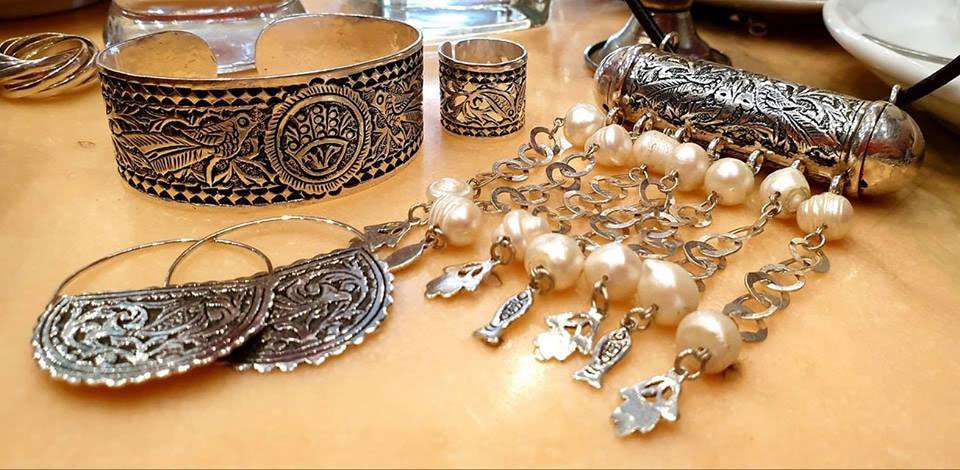
In Amazigh regions, silver dominates. It is not chosen for luxury, but for symbolism. Silver was believed to protect against envy, illness, and misfortune. It reflects light rather than absorbs it, and for centuries that reflection was thought to repel harm. Large fibulae clasped garments at the shoulders, heavy necklaces rested against the chest, and bracelets circled wrists with reassuring weight. These were not light ornaments. They were anchors.
The designs are geometric, deliberate, and ancient. Triangles, diamonds, lines, and dots repeat like coded messages. Each symbol carried interpretation: fertility, continuity, protection, belonging. Coral stones from the Mediterranean and amber beads from distant trade routes were set into silver frames, linking mountain villages to the sea and beyond. When a woman wore such jewelry, she wore her lineage openly.
In southern Tunisia, particularly in places like Tataouine and Douiret, jewelry becomes bolder, heavier, almost architectural. Necklaces cascade downward in layers. Earrings stretch longer. The body becomes a display of identity, not for vanity, but for visibility. In open landscapes where communities were spread apart, jewelry helped tell stories from a distance. One glance could reveal marital status, tribal affiliation, or life stage.
Wedding jewelry holds a special place in Tunisian tradition. It is not chosen casually. It is accumulated slowly, sometimes over years, sometimes across generations. Mothers pass pieces to daughters not simply as gifts, but as continuity. A bride adorned in traditional jewelry does not sparkle lightly. She carries weight. Her movement slows slightly under the metal, and that slowing is intentional. It commands presence. It marks transition.
In coastal cities and the north, gold takes precedence. Filigree work in places like Tunis and Sfax reveals a different aesthetic. Fine gold threads are twisted and soldered into lace-like forms, delicate yet precise. These pieces require extraordinary patience. Artisans work under magnification, shaping designs so intricate they appear almost woven. Unlike silver jewelry that announces itself boldly, gold filigree whispers elegance.
These pieces often appear during major celebrations. Weddings, engagements, religious holidays. Gold becomes the language of prosperity, stability, and blessing. Yet even here, symbolism remains. Pendants shaped like hands, crescents, or stylized flowers still carry protective meaning.
Jewelry workshops across Tunisia are often small, almost hidden. Behind narrow doors, artisans sit at wooden benches marked by years of use. Tools are minimal but precise. Flames flicker briefly beneath metal. Hammer taps echo softly. The work requires steady breath and steady hands. One mistake can undo hours of effort. This is craft that tolerates no impatience.
From a practical perspective, Tunisian jewelry reflects remarkable metallurgical knowledge. Alloys are balanced carefully. Stones are set securely to withstand daily wear. Clasps are reinforced not for display, but for longevity. These pieces were made to survive life, not sit untouched.
Emotionally, however, their value deepens over time. Jewelry absorbs touch. It warms to skin. It carries scent. It witnesses laughter, grief, celebration, childbirth, and aging. A bracelet worn daily becomes smoother where it rests against bone. An earring darkens slightly where it brushes hair. Over years, the piece becomes unique to its wearer.
Even today, many Tunisians keep traditional jewelry locked away, not because it is unused, but because it is respected. It is brought out during moments that matter. When it appears, it transforms the room. The past becomes present again.
To purchase traditional Tunisian jewelry is to accept responsibility. It is not simply to own something beautiful, but to carry forward a narrative forged through belief, craftsmanship, and care. These pieces were never meant to be trends. They were meant to endure.
Jewelry traditions across Tunisia remind us that beauty does not always shout. Sometimes it rests heavily on the body, quietly affirming who we are, where we come from, and what we choose to carry with us.
Worn close to the heart or clasped at the wrist, Tunisian jewelry remains what it has always been: history shaped by fire, meaning shaped by hands, and identity worn with dignity.