January 28, 2026 |
Where food becomes belonging
There are dishes that nourish the body, and others that shape identity. In Tunisia, couscous belongs firmly to the second category. It is not simply a meal. It is the emotion of Friday afternoons, the familiar scent rising from kitchens at midday, the dish that speaks hospitality more clearly than words. Prepared slowly, served generously, and remembered long after the table is cleared, couscous stands at the heart of Tunisian cultural life.
Although couscous is shared across North Africa, the Tunisian expression of it is deeply distinctive. Its diversity does not come from reinvention, but from geography and lived tradition. Each region shaped couscous according to its land, climate, and rhythm of life. Northern farms, coastal ports, central plains, and southern islands all tell their stories through the same grains.
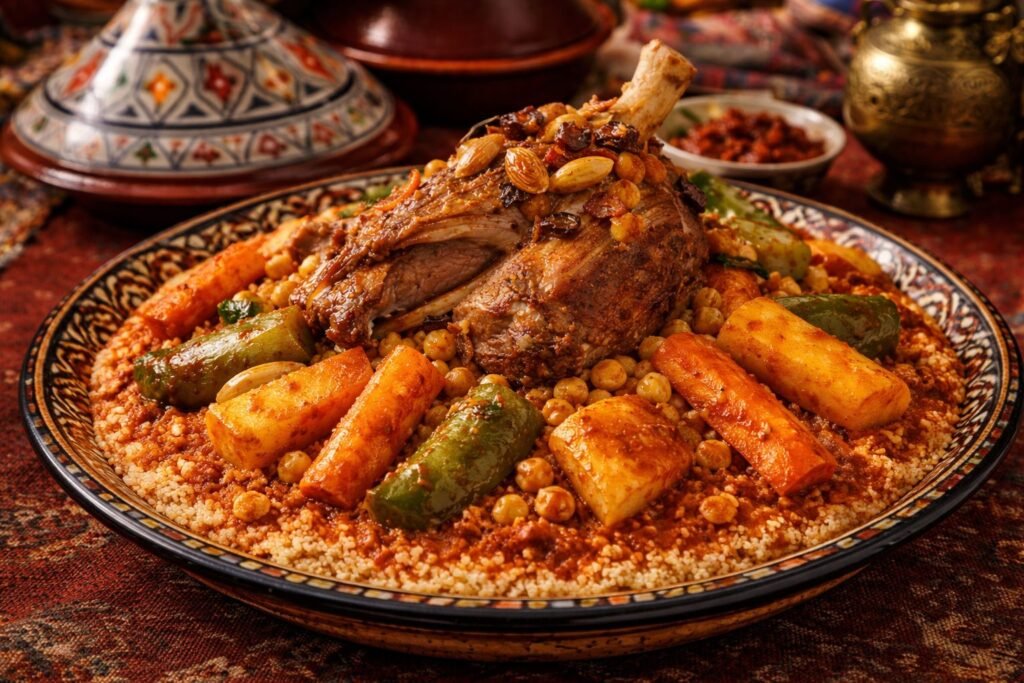
In the north, couscous is gentle and comforting. The broth is light and aromatic, carrying the sweetness of carrots, potatoes, squash, and chickpeas. Lamb or chicken rests delicately on top, while the grains remain separate, glossy with olive oil. This is the couscous of Friday lunch, served on large communal platters where everyone eats from the center. It is unhurried, warm, and deeply domestic, marking the pause of the week and the reassurance of family.
Along the coast, couscous takes on an entirely different character. In places like Mahdia, La Goulette, and Sfax, the sea reshapes the dish completely. Fresh fish, shrimp, calamari, and sea bream simmer slowly in tomato, garlic, and coriander. The broth becomes luminous and red, carrying both salinity and warmth. The grains absorb the essence of the Mediterranean, and eating this couscous feels like tasting the coastline itself.
Moving inland, couscous grows richer and more robust. Sauces are thicker, tomato paste deepens the flavor, spices become more pronounced, and meat takes on a stronger presence. Central Tunisia favors concentration and strength. This is couscous meant to sustain, reflecting agricultural life and physical labor. It is filling, grounded, and unapologetically hearty.
In the south, scarcity inspires precision. Broth is minimal, vegetables are finely cut, and flavor is built through steam rather than abundance. In Djerba, herbs tint the grains green, creating a couscous that feels fresh and island rooted. In desert towns, couscous is drier and simpler, yet intensely fragrant. Here, the dish is not about display, but about wisdom and restraint.
Among these many forms, two preparations hold particular cultural weight.
Couscous bel 3osben is the most ceremonial expression of the dish. Osben is a hand stitched sausage filled with rice, minced meat, chickpeas, dried mint, parsley, and spices. Once cooked and sliced, its interior reveals extraordinary care and balance. This couscous is reserved for major gatherings, holidays, and family reunions. It requires cooperation, experience, and patience, turning preparation itself into an act of heritage.
At the other end of the emotional spectrum is a dish of striking simplicity: white sweet couscous with sugar and pomegranate. The grains are steamed until light, gently moistened with milk, and sweetened just enough for sugar to dissolve softly. Pomegranate seeds scatter across the surface, adding freshness and color. Served during religious celebrations, childhood milestones, or quiet winter evenings, this couscous is pure nostalgia. It carries tenderness rather than abundance.
Both versions share the same truth. Couscous is not just nourishment. It is a gesture. One celebrates generosity and gathering. The other preserves memory and gentleness.
Across all regions, the ritual remains unchanged. Couscous marks reunion. It welcomes guests, honors family, softens grief, and formalizes joy. Even the simplest preparation involves intention. Washing the grains, steaming them carefully, coating them with oil to achieve the right texture, each step reflects care and respect.
Part of couscous’s endurance lies in its adaptability. Ingredients shift with season and circumstance, but meaning remains constant. When vegetables are scarce, substitutions appear. When meat changes, the dish adjusts. When the sea is near, fish becomes the centerpiece. Couscous absorbs change without losing its soul.
To travel through Tunisia and taste couscous from region to region is to read the country through food. Each grain carries traces of land, climate, and shared memory. Couscous begins with technique, but it endures through affection.
And so, Fridays continue. Pots steam gently. Tables fill. Conversations slow. Couscous arrives, not as food alone, but as ritual, reaffirming that home is found where people gather, eat together, and remember.
This is the essence of Tunisian couscous. Nourishment is only its surface. Belonging is its substance.