January 28, 2026 |
Bright colors, ancestral skill, and the living art of clay
There is a particular light that settles gently over Nabeul. It is a soft Mediterranean glow, touched by sea air and the scent of orange blossoms drifting in from nearby orchards. In this town, clay is more than a raw material. It is memory shaped by hand, tradition carried across generations, and history warmed under skies that rarely deny sunlight. Ceramics in Nabeul are not created merely to decorate homes. They exist to preserve identity.
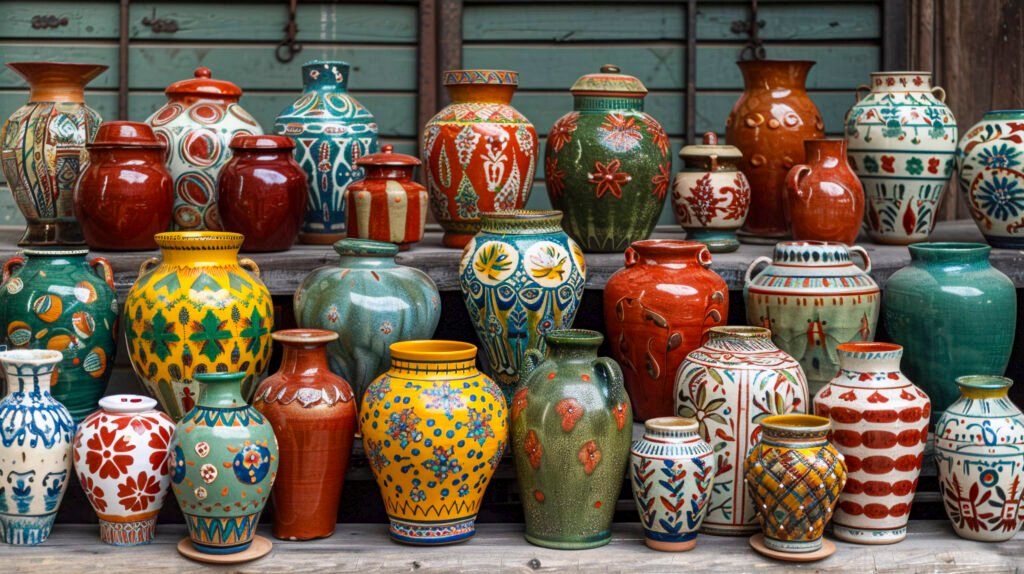
Walking through the souks of Nabeul feels like stepping into a living gallery. Stacks of hand painted tiles lean against shop walls. Bowls shimmer in deep turquoise. Plates catch the morning light as if holding fragments of the sea itself. The colors are unmistakable: cobalt blue, sunflower yellow, pomegranate red, emerald green. Nothing here is accidental. Each shade carries symbolism. Each brushstroke reflects intention. These designs echo Andalusian heritage, Ottoman elegance, Phoenician rhythm, and Amazigh geometry. Time is visible on every surface.
Inside the workshops, the atmosphere changes. The noise fades. A mound of clay waits quietly, cool and moist. The artisan presses into it and the material yields, folding inward like soft dough. Slowly, form appears. A bowl curves. A vase widens. A plate stretches into balance. These movements are repeated so often they become instinctive. In the past, children learned them early, absorbing skill as part of daily life. Today, artisans pass the same knowledge to new generations, including young apprentices who choose craft as a future rather than a relic. The tradition continues because it evolves without losing its soul.
What distinguishes Nabeul ceramics on a technical level is the harmony between material and method. The local clay is dense and responsive, well suited to glaze and heat. Kilns are carefully controlled, transforming fragile grey forms into durable pieces that ring softly when tapped. Firing is not simply heat. It is a moment of transformation. Glaze becomes glass. Color becomes permanent. What emerges carries identity beyond shape alone.
Emotionally, these ceramics matter because they belong to daily life. A blue and white bowl may serve olives at sunset, soup in winter, or couscous shared during family gatherings. A painted tray presents sweets during Ramadan. A simple clay jug cools water naturally on hot afternoons. What appears decorative is deeply practical. Function becomes intimacy.
Step into a local home and ceramics appear everywhere. Resting against walls, stacked neatly in cabinets, sometimes chipped at the edges from years of use. Those marks are not flaws. They are history. Some families keep special sets reserved only for guests. Others place a single plate beneath fruit simply because the colors feel right together. Beauty here is lived, not displayed.
Preserving Nabeul’s ceramic heritage also carries ethical importance. Many workshops remain family run. Artisans often work with remarkable skill for modest income, while competing against factory made imitations. Choosing authentic, handmade ceramics supports sustainability over mass production. It sustains an art form built on patience, slow drying, careful painting, and precise firing.
The ceramic industry also supports a wider local economy. Clay is sourced from regional quarries. Kilns rely on fuel and maintenance. Painters specialize in motifs that demand years of training. Packaging, transport, and export extend the craft beyond the workshop. Each finished piece represents a network of labor and care.
There is a defining moment in the life of every ceramic piece. It happens when it is lifted from the kiln, still warm, glaze shining as though freshly painted. Colors deepen. Light settles differently across the surface. In that moment, the artisan does not just see an object, but continuation. Another bowl added to a lineage. Another piece ready to travel into a new home, another country, another future.
The ceramics of Nabeul represent Tunisia in tangible form. They hold centuries of exchange, patience, coastal light, and human touch. They are meant to hold food, memory, and space within daily life. And because each piece carries the slight imperfection of the hand that shaped it, no two are ever identical.
To own a ceramic from Nabeul is not simply to own pottery. It is to welcome into your life something shaped slowly, painted carefully, fired with intention, and passed forward with pride. A piece of Tunisia, sealed by hand and carried through time.