January 28, 2026 |
From sea to sand, from forest to stone
Tunisia is often described as a small country. On a map, that is true. On the ground, it is not. The landscape changes quickly, sometimes within the span of a single drive. Salt air gives way to pine scented hills. Olive plains flatten into stone. Stone softens into sand. Few countries offer such contrast within such closeness, and fewer still allow these worlds to coexist without fracture.
To travel through Tunisia is not to move between destinations, but between atmospheres. Each region carries its own light, rhythm, and relationship with the land. Geography here is not background. It is character.
Beaches shaped by light and routine
Tunisia’s coastline stretches for more than 1,300 kilometers, touching multiple governorates, each with its own interpretation of the sea.
In the north, the coast of Bizerte feels wild and fresh. Cliffs drop into deep blue water. Winds are stronger. The sea feels open and alive. Small coves appear suddenly, bordered by rock and green.
Moving eastward, the beaches of Nabeul and Sousse become softer and more luminous. Sand lightens. Water shallows. Life unfolds along the shore. Cafés, fishing ports, and long promenades blend daily routine with leisure.
Further south, in Mahdia and Sfax, the sea becomes calmer, more introspective. Fishing defines the horizon. Beaches are less crowded, more local, shaped by working life rather than tourism.
On the island of Medenine, the sea turns gentle and shallow. In Djerba, water reflects sky almost without movement. Palm trees replace cliffs. The beach becomes a place of stillness rather than spectacle.
Green Tunisia, unexpected and quiet
Few expect forests in Tunisia. Fewer still expect mist.
In the northwest, the governorates of Jendouba, Béja, and Kef reveal a different country altogether. Here, the land rises into the Atlas foothills. Oak and pine forests stretch across slopes. Winters are cold. Rain is generous.
The Kroumirie region feels almost European at times, with winding roads, deep green valleys, and villages built from stone rather than sand. Agriculture thrives here. Wheat fields, grazing land, and forest life shape the economy.
This is Tunisia slowed down. Quiet. Introspective. A landscape of breath and distance.
Horizons shaped by work
Between north and south, Tunisia opens into wide plains. In Kairouan, Siliana, and parts of Sidi Bouzid, land stretches outward rather than upward.
Olive trees dominate the view. Rows repeat until the horizon softens. The soil is dry, pale, and patient. This is agricultural Tunisia, shaped by rhythm rather than scenery. Life here is measured in seasons, harvests, and heat.
There is a quiet dignity to these landscapes. Nothing distracts. Everything endures.
Where space becomes presence
In the south, Tunisia opens fully into the Sahara. The governorates of Tozeur, Kebili, and Tataouine define this world.
Here, sand replaces soil. Dunes rise and fall like frozen waves. Light becomes sharper. Sound disappears. Space expands.
Oases interrupt the desert with green discipline. Palm groves create shade. Water flows through ancient channels. Life organizes itself vertically, with palms above, crops below, people protected in between.
The desert is not empty. It is precise. It teaches economy of movement, clarity of purpose, and respect for limits.
Stone, history, and survival
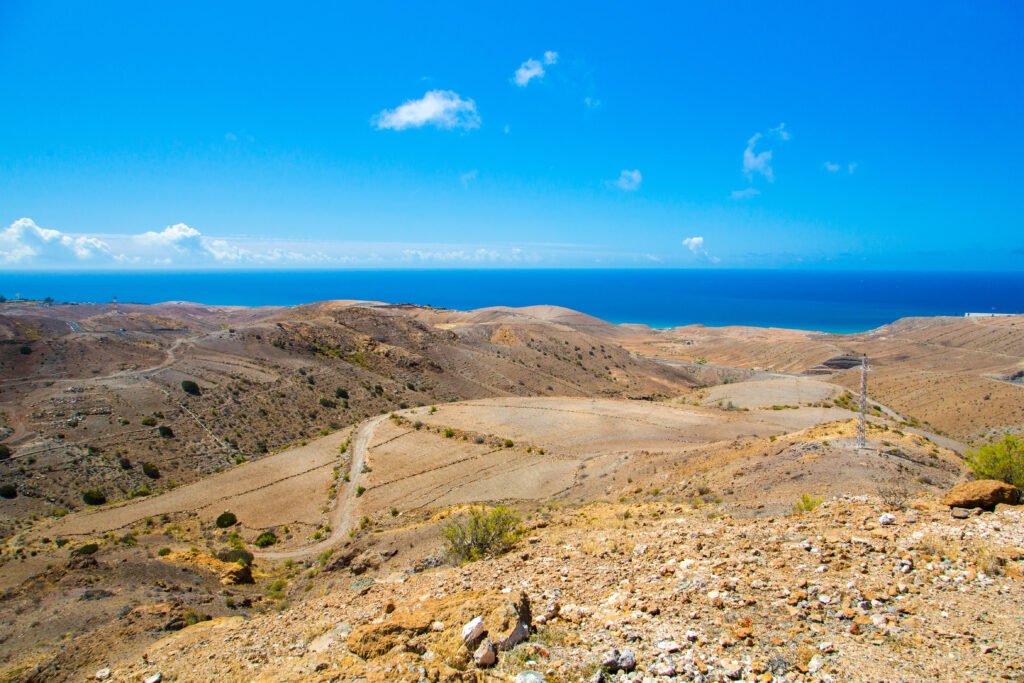
In southern Tunisia, mountains appear again, but differently. In Tataouine, hills rise in stone rather than forest. Villages cling to slopes. Architecture blends into landscape.
This is land shaped by survival rather than abundance. Troglodyte homes, ksour, and fortified granaries speak of protection and adaptation. The mountains here are not scenic. They are functional. They hold history in their walls.
What defines Tunisia is not any single landscape, but the way they connect. You can leave a forest in the morning and reach the desert by afternoon. You can swim in the Mediterranean and, hours later, walk through sand dunes. These transitions are not abrupt. They are gradual, logical, and deeply human.
Each governorate holds its own relationship with land, shaped by climate, history, and necessity. Together, they form a country that cannot be reduced to one image.
Tunisia is not only beaches.
It is not only desert.
It is not only mountains or plains.
It is movement between them.
To travel through Tunisia is to understand how geography shapes identity. How people adapt without losing themselves. How contrast becomes coherence.
And when the journey ends, what remains is not a postcard image, but a sense of having crossed many worlds without ever leaving one country.