January 28, 2026 |
A journey through the tastes that move a nation
If you truly want to understand Tunisia, its rhythm, warmth, and character, the journey begins in the street. Not inside fine dining rooms or hotel buffets, but in lively medinas, neighborhood cafés, and seaside stalls where food and daily life blend naturally. Tunisian street food is not simply something to eat. It is a shared experience, a reflection of creativity, and a genuine expression of how Tunisians turn simple ingredients into powerful flavors.
From Tunis to Sousse, from Sfax to Djerba, every region adds its own touch. Street food is present at every moment of life. It is what people eat before work, share with friends, enjoy late at night, or grab quickly between errands. Each dish carries history, geography, and personality, forming an edible portrait of Tunisia itself.
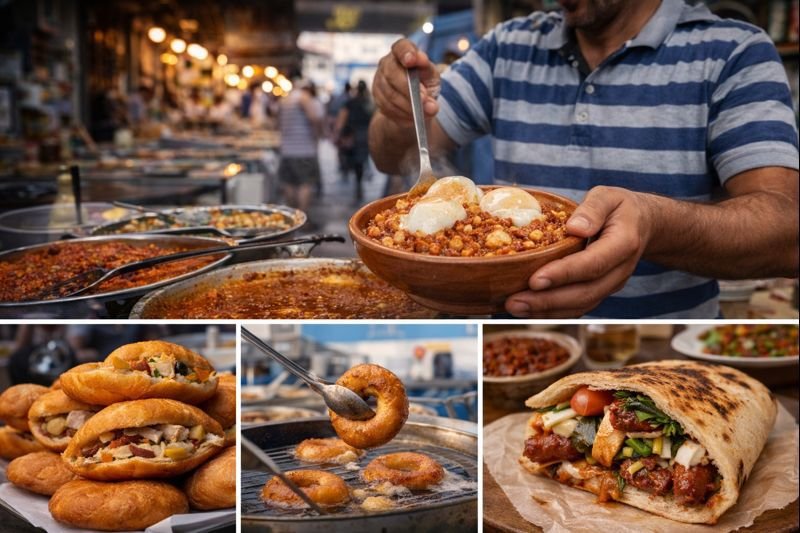
At the heart of this culture is lablabi, the iconic chickpea soup that fills cafés on cool mornings with the aroma of cumin and garlic. Served with olive oil, tuna, harissa, lemon, soaked bread, and sometimes a soft boiled egg, lablabi is comforting and generous. It is a dish that feels familiar even on the first taste, offering warmth, simplicity, and depth in every spoonful.
Another essential favorite is fricassé, a soft golden sandwich found in small family run snack shops across the country. Filled with tuna, potatoes, olives, eggs, and harissa, it captures the balance that defines Tunisian cuisine. Mild and spicy, hearty and light, each bite reflects the lively energy of the streets where it is served.
Along the coast, especially in Sousse and Djerba, the scent of bambalouni drifts through the air. This freshly fried doughnut, crisp on the outside and tender inside, is dusted with sugar and eaten hot. Enjoyed near the sea, often at sunset, bambalouni is deeply nostalgic. For many Tunisians, it brings back memories of childhood, summer evenings, and family outings.
Equally central to street food culture are mlawi and tabouna sandwiches. Mlawi, with its flaky layered texture, pairs perfectly with merguez, cheese, or slata mechouia. Tabouna, baked in traditional clay ovens, has a smoky flavor that gives every filling extra depth. These breads reflect Tunisia’s strong connection to land and tradition, where bread is not just food, but a symbol of life and sharing.
For lovers of bold flavors, slata mechouia stands out. Made from roasted peppers, tomatoes, garlic, and olive oil, with the unmistakable heat of harissa, it brings intensity and freshness together. Whether spread inside a sandwich or served as a side, it tastes of sun, fire, and generosity.
Street food in Tunisia is also about atmosphere. It is the vendor who recognizes you after one visit, the shared tables where strangers talk easily, the mix of Arabic, French, and local dialects in the background. It is the sound of coffee cups, laughter, and daily conversation. This is Tunisia as it is lived, honest, welcoming, and full of flavor.